LEARNING STRATEGY · ORGANIZATIONAL CHANGE
Designing for Sustainability
Leading a Schoolwide Digital Learning Transformation
- Organization
- Gwinnett County Public Schools (GCPS)
- Timeline
- Late March–Early April 2020
- My Role
- 5th Grade Lead Innovator | Educator
- Focus Areas
- Learning Strategy · Change Management · Performance Improvement · Stakeholder Engagement · Digital Learning · Inclusive Design
Project Overview
When the COVID-19 pandemic forced school districts to transition to remote instruction, educators faced an unprecedented challenge: maintaining instructional continuity while navigating unfamiliar technologies, competing responsibilities, and rapidly changing expectations.
At Gwinnett County Public Schools, individual schools were responsible for determining how digital instruction would operate. Within my school, administration discovered significant differences in how teachers used district-provided digital resources, including the learning management system (LMS).
These inconsistencies created an unpredictable experience for students and families.
As the school's 5th Grade Lead Innovator, I proposed an instructional delivery model designed to create consistent expectations without sacrificing the flexibility teachers needed during an extraordinary period of disruption.
Developed in late March and early April 2020, my recommendation became the foundation of the school's adopted instructional approach.
Digital Learning Transformation Blueprint
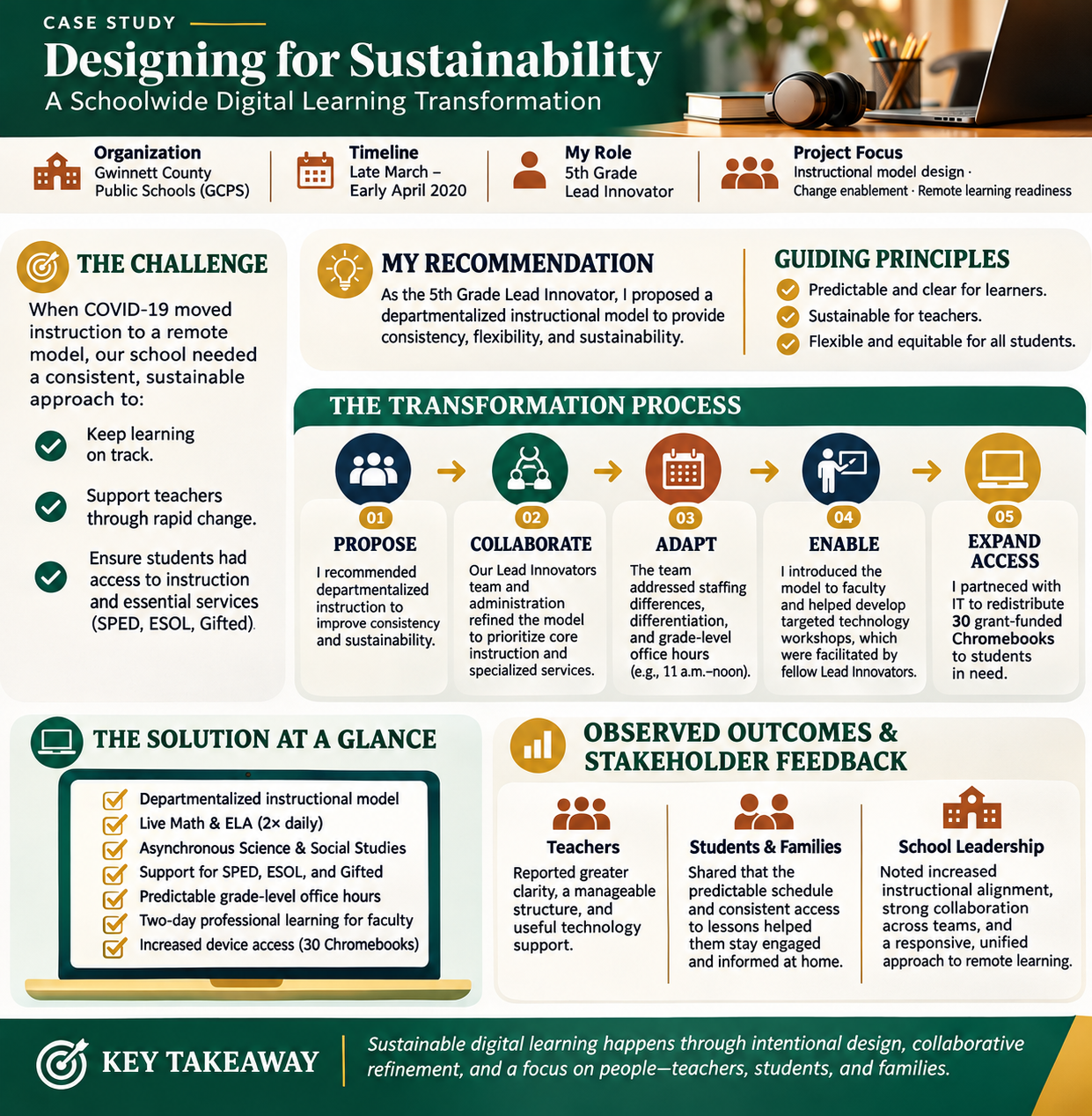
Read Digital Learning Transformation Blueprint
Designing for Sustainability
A Schoolwide Digital Learning Transformation
Organization: Gwinnett County Public Schools (GCPS)
Timeline: Late March–Early April 2020
My Role: 5th Grade Lead Innovator
Project Focus: Instructional model design · Change enablement · Remote learning readiness
The Challenge
When COVID-19 moved instruction to a remote model, our school needed a consistent, sustainable approach to:
- Keep learning on track.
- Support teachers through rapid change.
- Ensure students had access to instruction and essential services (SPED, ESOL, Gifted).
My Recommendation
As the 5th Grade Lead Innovator, I proposed a departmentalized instructional model to provide consistency, flexibility, and sustainability.
Guiding Principles
- Predictable and clear for learners.
- Sustainable for teachers.
- Flexible and equitable for all students.
The Transformation Process
- Propose: I recommended departmentalized instruction to improve consistency and sustainability.
- Collaborate: Our Lead Innovators team and administration refined the model to prioritize core instruction and specialized services.
- Adapt: The team addressed staffing differences, differentiation, and grade-level office hours (e.g., 11 a.m.–noon).
- Enable: I introduced the model to faculty and helped develop targeted technology workshops, which were facilitated by fellow Lead Innovators.
- Expand Access: I partnered with IT to redistribute 30 grant-funded Chromebooks to students in need.
Clarification: The blueprint’s office-hours example is incomplete. As explained in the approved narrative, grade-level office hours were available throughout the instructional day, excluding the 11 a.m.–noon lunch period.
The Solution at a Glance
- Departmentalized instructional model
- Live Math & ELA (2× daily)
- Asynchronous Science & Social Studies
- Support for SPED, ESOL, and Gifted
- Predictable grade-level office hours
- Two-day professional learning for faculty
- Increased device access (30 Chromebooks)
Observed Outcomes & Stakeholder Feedback
Teachers: Reported greater clarity, a manageable structure, and useful technology support.
Students & Families: Shared that the predictable schedule and consistent access to lessons helped them stay engaged and informed at home.
School Leadership: Noted increased instructional alignment, strong collaboration across teams, and a responsive, unified approach to remote learning.
Key Takeaway
Sustainable digital learning happens through intentional design, collaborative refinement, and a focus on people—teachers, students, and families.
The Challenge: Consistency Without Unsustainable Expectations
School leadership needed a standardized approach to remote instruction that would provide students and families with predictable schedules, consistent access to teachers, and clear expectations for learning.
However, standardization alone would not guarantee successful implementation.
Teachers were being asked to deliver live instruction, provide individualized assistance, manage grading, and learn unfamiliar digital platforms. Many were simultaneously supporting their own school-aged children at home.
I recognized that a model requiring every teacher to remain online throughout the instructional day could create unsustainable workloads and undermine consistent implementation.
The challenge was therefore broader than selecting a digital platform.
How could we establish a reliable, schoolwide learning experience while preserving teacher capacity, supporting differentiated instruction, and maintaining access for students and families?
My Strategic Recommendation
The Lead Innovators team narrowed the available instructional approaches to two models.
The first was a self-contained approach in which individual teachers retained responsibility for teaching every subject, facilitating student support, and completing grading.
The second was a departmentalized approach in which teachers specialized in assigned subjects and shared instructional responsibilities.
I advocated for departmentalization.
My recommendation was grounded in three principles:
1. Predictability supports learning. Students and families needed a consistent daily rhythm, including established content-release times, live instructional periods, and opportunities to receive assistance.
2. Sustainable systems support consistent performance. Teachers needed protected opportunities to plan, grade, collaborate, and support their own families. An approach that relied on continuous live instruction risked burnout and inconsistent adoption.
3. Flexibility and standardization can coexist. Schoolwide expectations could remain consistent while instructional responsibilities were distributed to accommodate the needs of teachers and learners.
My initial proposal called for teachers to specialize across Math, English Language Arts (ELA), Science, and Social Studies.
The goal was not simply to reduce workload. It was to create an instructional system that educators could realistically sustain.
Collaborative Solution Design
The proposal evolved through discussions with the Lead Innovators team and school administration.
Administration emphasized the importance of prioritizing Math and ELA while ensuring students continued receiving instruction and services from appropriately qualified Special Education (SPED), Gifted, and English to Speakers of Other Languages (ESOL) teachers.
Working collaboratively, the team refined the original model.
Prioritizing Core Instruction
The team agreed to deliver Science and Social Studies asynchronously, allowing live instructional capacity to focus on Math and ELA.
Math and ELA were offered twice daily through differentiated instructional sessions involving SPED/ESOL and Gifted/General Education teachers, with scaffolding adjusted to support different learner needs.
Addressing Staffing Constraints
One of the most significant implementation challenges involved differences in ESOL-certified staffing across grade levels.
Some teams had two ESOL-certified teachers, while others had only one.
Rather than requiring individual teachers to assume an inequitable workload, the Lead Innovators team developed staffing accommodations.
Where two ESOL-certified teachers were available, responsibilities were divided between Math and ELA.
Where only one ESOL-certified teacher was available, that teacher supported both subjects through co-teaching and was relieved of office-hour responsibilities.
These arrangements were collective team decisions that helped make the instructional model more feasible across grade levels.
Establishing Accessible Support
The final model included predictable live instructional periods, designated content-release times, and grade-level office hours.
Office hours were available across the grade level throughout the instructional day, excluding the 11 a.m.–noon lunch period. Families could access an available teacher without being restricted to their individual classroom teacher's schedule.
This created greater flexibility while maintaining consistent expectations for instructional support.
Leading Schoolwide Change Communication
Following administration's approval, the Lead Innovators team organized a two-day professional development experience to prepare faculty for the new instructional model.
Because I originated the proposal and could explain its underlying rationale, my fellow Lead Innovators selected me to serve as the primary presenter introducing the new model to the entire faculty.
I led the schoolwide discussion, explaining the instructional structure, its purpose, and the considerations that shaped its development. I was positioned to address questions and concerns from teachers and administrators about the new initiative.
The professional development was organized into two complementary days.
Day One: Building Shared Understanding
Faculty received an overview of the new instructional model, including subject assignments and schedules.
Following the introduction, teachers participated in subject-specific sessions facilitated by other Lead Innovators. These sessions addressed instructional resources and effective scaffolding practices.
Day Two: Preparing for Implementation
Teachers engaged in grade-level collaborative planning to coordinate instructional responsibilities and prepare for implementation.
They also selected three professional development workshops based on their individual needs.
Workshop topics included Google Classroom setup, Zoom operation and etiquette, and district LMS setup.
I proposed these technology-focused topics and contributed to their development, while other Lead Innovators facilitated the individual breakout sessions.
This combination of common expectations, role-specific preparation, and choice-based professional development supported teachers with different levels of technology proficiency.
Supporting Equitable Access to Digital Learning
Successful digital instruction required more than an effective schedule and prepared educators. Students also needed access to appropriate technology.
During the professional development implementation period, I worked with the school's IT team to donate a classroom set of 30 Chromebooks that I had obtained through a Walton EMC grant.
IT successfully redistributed all 30 Chromebooks to students identified as needing technology access.
This contribution addressed a practical barrier to participation and reinforced an important principle of learning strategy: even a well-designed learning experience cannot achieve its intended purpose if learners cannot access it.
Implementation and Observed Impact
Following implementation, the school established consistent instructional schedules, designated office hours, and collaborative planning opportunities.
The new structure also provided administration with greater visibility into instructional delivery and opportunities to observe and engage with students during live classes.
Feedback from teachers, families, and administrators indicated several benefits.
For teachers: Colleagues appreciated not having to remain on camera throughout the entire school day. The departmentalized model provided greater flexibility to manage professional responsibilities and support their own children.
For students and families: Parents praised the predictable schedule and consistent expectations. Recorded lessons allowed families to revisit instruction and provide additional support at home.
For school leadership: Administrators valued the clearer instructional expectations and the ability to observe teaching and monitor implementation.
For collaboration: Scheduled collaborative meetings supported continued instructional coordination. Based on my observations, participating teachers engaged in discussions that were as substantive as those occurring during in-person instruction.
These outcomes reflect firsthand observations and qualitative stakeholder feedback rather than a formal quantitative evaluation. The project did not establish documented causal improvements in academic achievement or reductions in teacher burnout.
Reflection: What This Experience Reinforced
This initiative reinforced my belief that effective learning strategy must account for the entire environment in which performance occurs.
The original organizational concern centered on inconsistent digital learning practices. However, resolving that concern required consideration of teacher capacity, instructional responsibilities, technology proficiency, differentiated learner needs, family expectations, and access to devices.
The strongest solution was not the one that maximized standardization. It was the one that established meaningful consistency while remaining feasible for the people responsible for delivering it.
I also learned the importance of treating stakeholder feedback as an opportunity to strengthen a solution rather than a challenge to its original design.
My initial recommendation evolved substantially through collaboration with administration and fellow Lead Innovators. Those refinements made the approach more responsive to staffing realities and student needs.
Most importantly, this experience demonstrated how a learning professional can influence organizational performance by identifying systemic barriers, recommending practical solutions, and helping people navigate change.
Key Takeaway
Sustainable learning transformation requires more than new technology or additional training. It requires a coordinated strategy that aligns organizational expectations, human capacity, instructional support, and access to resources.
This principle continues to inform my approach to learning strategy, workforce enablement, and performance improvement.
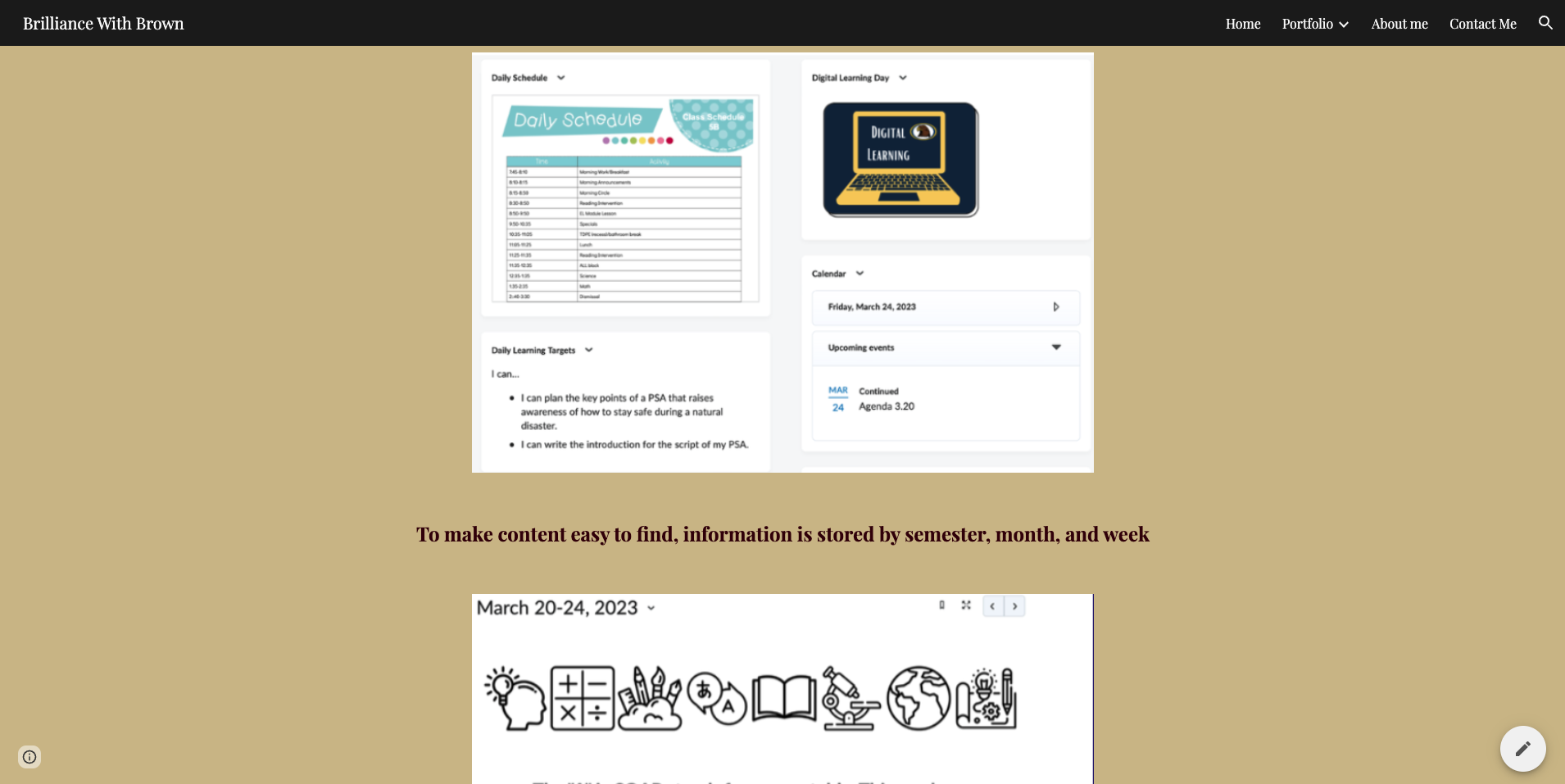
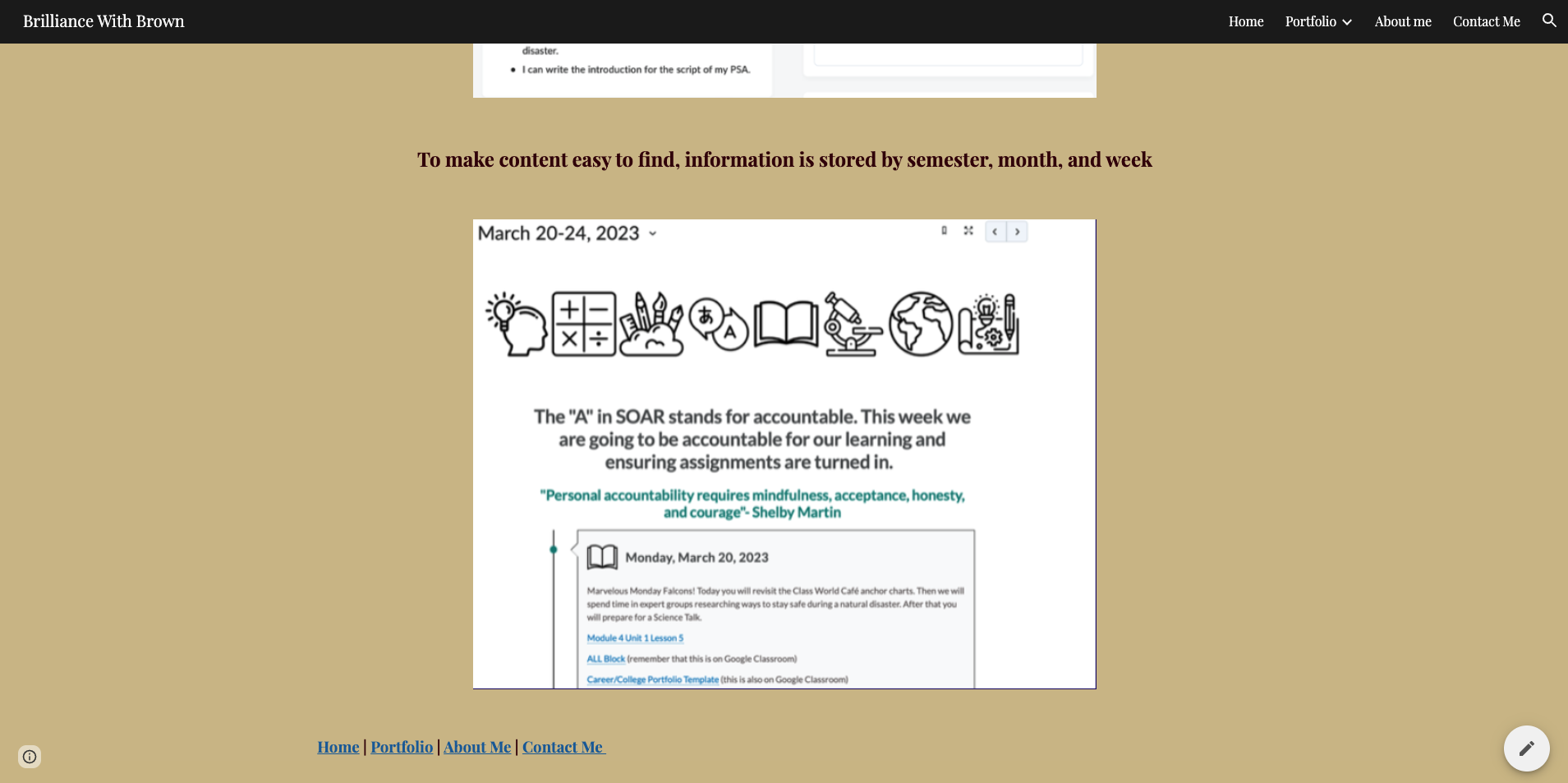
Related Work: Designing an Intuitive LMS Experience (2022–2023)
I independently designed a semester → month → week content organization system within the eCLASS LMS to make instructional materials easier to find.
The structure applied information architecture, predictable navigation, learner-centered design, and cognitive load management to support self-directed access to instructional resources.
These authentic portfolio screenshots show examples from the 2022–2023 school year. They are separate from the March–April 2020 initiative described above.

This case study describes a real professional experience at Gwinnett County Public Schools. Individual contributions, collaborative decisions, and qualitative observations are distinguished to accurately represent the scope and outcomes of the initiative.